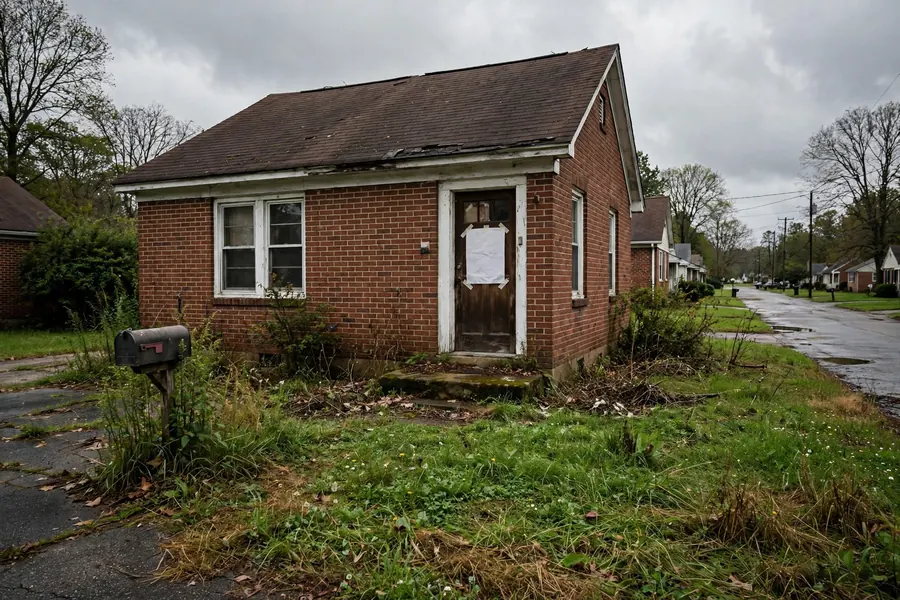
3 things that happen AFTER you miss your second mortgage payment in Maryland.
Most homeowners picture foreclosure as something that arrives all at once — a knock on the door, a sign in the yard. It doesn’t work that way. It works like this:
- Your lender starts the legal clock. Missed payments get reported, late fees stack up, and your account moves from “past due” to the loss-mitigation and legal side of the company.
- The paperwork starts moving toward court. In Maryland, foreclosure is a judicial process — it goes through the court system, and the lender’s attorneys file what is called an Order to Docket. That filing is what turns late payments into an actual case.
- Your options start shrinking. Early on, you usually have more choices than you think. The longer the process runs, the fewer of those choices remain — and the more each one costs.
Here’s the honest truth: falling behind does not mean foreclosure is inevitable. But every option below has a window, and every window closes. This guide walks through all seven ways Maryland homeowners prevent foreclosure — what each one is, what it really costs you in money, time, and credit, and who it actually fits.
What happens if you do nothing about a Maryland foreclosure?
If you do nothing, the court process keeps moving without you. The lender’s case proceeds, the home can be sold at a foreclosure auction, and you can lose both the house and any equity built up in it — plus you may still owe money afterward if the sale doesn’t cover the loan. Doing nothing is the only option that removes every other option.
1. Reinstatement — catching up in one payment
What it is: You pay everything you’re behind — missed payments, late fees, and any costs the lender has added — in one lump sum, and the loan goes back to normal as if nothing happened.
What it really costs: Money, all at once. If you’re three payments behind on a $2,000 mortgage with fees, you could be looking at $7,000 or more due at one time. There’s no direct credit “cost” beyond the late payments already reported, and reinstatement is the cleanest ending of all — the loan simply continues.
Who it fits: Homeowners whose problem was temporary and one-time — a tax refund, a family loan, a bonus, an insurance payout — and whose income is back to normal. If the money genuinely exists, this is option one.
2. Forbearance — pausing or reducing payments for a set period
What it is: Your lender agrees to pause or reduce your payments for a defined stretch of time while you get back on your feet.
What it really costs: Time and planning. The missed amount doesn’t disappear — it comes due at the end of the forbearance period, gets added to the loan, or gets handled through a repayment plan or modification. Credit reporting during forbearance depends on the agreement, so get the terms in writing.
Who it fits: Someone with a clear, dated end to the hardship — returning to work after an injury, a job that starts next month, a short gap between contracts.
3. A repayment plan — spreading the missed amount over future payments
What it is: Instead of one lump sum, the lender adds a portion of what you owe on top of your regular payment for an agreed number of months until you’re caught up.
What it really costs: A higher monthly payment for a while. If your regular payment is $2,000 and you’re $6,000 behind, a 12-month plan makes your payment roughly $2,500 until you’re current. The maths has to work with your real budget — a plan you can’t sustain just delays the same problem.
Who it fits: Homeowners whose income has recovered but who can’t produce the full arrears in one payment.
4. A loan modification — changing the loan itself
What it is: The lender permanently changes your loan terms — the interest rate, the length of the loan, or adding the missed amount to the balance — to bring the monthly payment down to something you can afford long-term.
What it really costs: Time. Modifications involve applications, income documents, and often a trial payment period before anything becomes permanent. Federal law gives your servicer 30 days to decide once your application is complete — but getting to “complete” and finishing a trial payment plan usually stretches the full process to several months. Your credit will already show the late payments, and a modification can add its own notation. But for many families, this is the option that actually keeps them in the home.
Who it fits: Homeowners with steady income that is simply lower than it used to be — a job change, reduced hours, a household that went from two incomes to one.
5. Foreclosure mediation — a meeting Maryland offers you
What it is: Maryland gives homeowners in foreclosure a chance to request mediation — a meeting with the lender, run by a neutral mediator, where you can go over your options face to face instead of through letters and call centres.
What it really costs: A small filing cost may apply, and you have to act inside the window the notice gives you. That window is short: when the Final Loss Mitigation Affidavit arrives, you have just 25 days to file the mediation request form that comes with it — plus a $50 filing fee, waivable for hardship — at the Circuit Court, or the right is gone. Missing that window generally means the opportunity passes. The meeting itself costs you an afternoon; not using it can cost you the house.
Who it fits: Almost everyone who wants to keep the home and hasn’t gotten a straight answer from their lender. If your calls go nowhere, mediation is the tool Maryland built for exactly that situation.
Before you choose, sit with one question: What happens to your credit — and your next home — if this reaches auction instead of ending on a date you chose? A foreclosure on your record follows you for years and makes the next rental or mortgage harder and more expensive. Every option on this list — even selling — exists to keep that from being the ending.
Not sure which of these seven fits your situation? Talk it through with one of our trusted housing specialists — no pressure, no judgement, and no obligation. Call (240) 616-4844, or enter your address to see what we could pay if selling turns out to be your best option. No fees. No commissions. No obligation.
6. A short sale — selling for less than you owe, with the lender’s permission
What it is: If you owe more than the house is worth, the lender agrees to accept the sale proceeds as settlement of the loan, even though the amount comes up short.
What it really costs: Time — lender approval can take months, and buyers walk away during the wait. Your credit takes a real hit, though usually less severe than a completed foreclosure. You also give up the house, so this only makes sense when keeping it is no longer the goal.
Who it fits: Homeowners who are underwater on the loan, need to move on, and want to avoid a foreclosure on their record.
7. Sell the house before the auction — including selling for cash
What it is: You sell the home yourself, on your timeline, before the court’s timeline decides for you. That can mean listing it with an agent if you have time and the house is in good shape — or selling as-is to a cash buyer like us when time, repairs, or certainty matter more.
What it really costs: Honesty first: a cash offer is usually lower than top market price. What you give up in price, you trade for speed and certainty — no repairs, no showings, no waiting on a buyer’s financing, and a closing date you pick. If you have equity, selling before auction protects it instead of losing it at a courthouse sale.
Who it fits: Homeowners who can’t catch up, don’t qualify for a modification, or have decided the house itself is the problem — and who would rather end this on their own date than the court’s.
Frequently asked questions
How long does foreclosure take in Maryland?
Maryland foreclosure goes through the courts and involves required notices and a chance to request mediation, so it takes longer than in many states — but how long varies widely by county, court scheduling, and whether you respond. On paper, a sale can be scheduled as soon as about 45 days after the court papers are served, but in practice most cases run several months from Order to Docket to sale — and requesting mediation or a modification review stretches it further. The safe takeaway: you have more time than the letters make it feel like, and less time than you’d like. Use it early.
Can I stop a Maryland foreclosure once it has started?
Yes — starting the process is not the end of it. Reinstatement, a repayment plan, a modification, mediation, or a sale can all stop the process at different points, which is why the seven options above matter even after court papers arrive. The later it gets, the fewer remain available, so the best time to act is as soon as you know you’re in trouble.
Does Prince George’s County offer foreclosure help?
Prince George’s County homeowners can work with HUD-approved housing counsellors, who review your situation and deal with lenders every day — and their help is typically free. A counsellor can also help you prepare for mediation. Whether you call a counsellor, your lender, or us, the important thing is that somebody hears from you before the deadlines in your notices pass.
Will a foreclosure in Baltimore or Montgomery County work the same way?
The Maryland process is state law, so the overall steps are the same in Baltimore, Montgomery County, and Prince George’s County — court filing, notice, the chance to request mediation, and a sale only after the process runs its course. Timelines and court scheduling differ by county, which is another reason to act while your options are still open.
If selling is one of the options you’re weighing, find out what it actually looks like in numbers.
Enter your address to see what we could pay. No fees. No commissions. No obligation. You talk with one of our trusted housing specialists — a real person who will walk through your options, including the ones where you keep the house. Prefer to talk first? Call (240) 616-4844.
Quick Fast Homebuyers — We Buy Houses in Maryland for Cash.